
Inside CZ Binance Plan to Turn ASEAN Into Crypto Federation
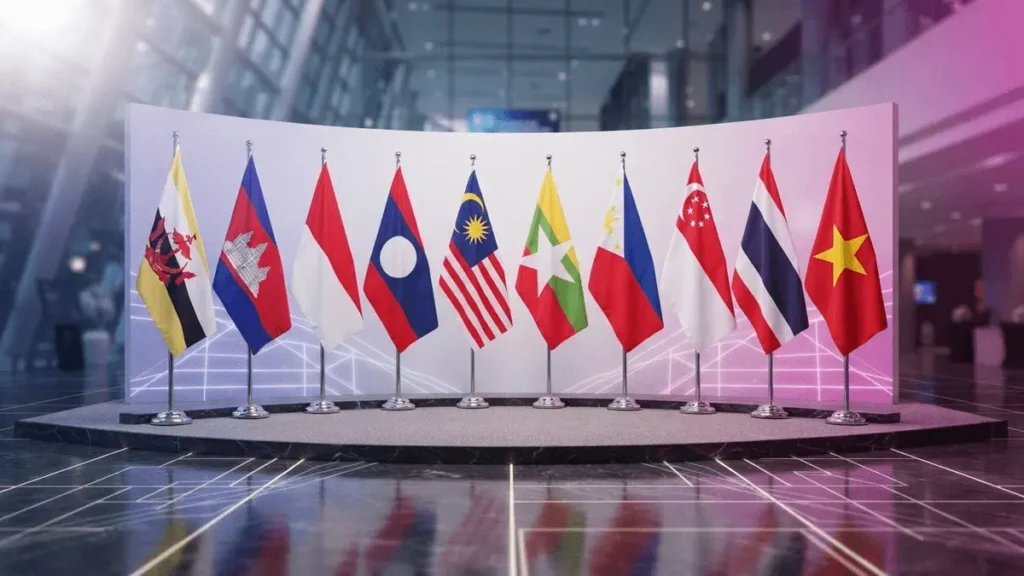
Changpeng Zhao (CZ Binance) publicly backed a crypto license passporting system across ASEAN at the ASEAN Tech Summit Manila 2026 on July 28, arguing that firms already licensed in one member state should face only a streamlined approval process, not a full re-application, to operate across the rest of the bloc.
The proposal, if adopted, would materially reduce compliance overhead for crypto and stablecoin service providers targeting Southeast Asia’s fragmented regulatory landscape.
Speaking during the “One ASEAN, One Digital Economy” fireside chat alongside FinTech Alliance PH founding chair Lito Villanueva, CZ endorsed Villanueva’s idea of license portability across the region.
Regulators would retain the right to review applicants entering their jurisdiction, but the threshold would be fundamentally lower than starting from scratch in every market.
See you all tmr, in Manila
https://t.co/KOkXZmVoea
— CZ
BNB (@cz_binance) July 26, 2026
“I think that’s mostly a political problem,” Zhao said of cross-border regulatory coordination, adding that the underlying technology posed no meaningful obstacle.
He argued that allowing more licensed platforms to compete regionally would improve services and reduce costs for consumers, a straightforward pro-competition case that sidesteps the harder question of how to get nine politically distinct regulators to agree on mutual recognition standards.
Bitcoin News: Why Regulatory Fragmentation Is a Real Cost for ASEAN Crypto Firms
The problem Zhao is identifying is structural. Southeast Asia currently has no bloc-wide passport for crypto companies – each ASEAN member state runs its own digital asset licensing regime, with separate AML requirements, conduct rules, and capital standards.
A firm seeking a genuine regional presence must run parallel licensing processes across multiple jurisdictions simultaneously, which scales compliance costs in a way that disadvantages smaller, well-regulated operators relative to larger incumbents.
The regulatory framework Zhao described mirrors the EU’s MiCA model directly. Under the Markets in Crypto-Assets Regulation, a crypto-asset service provider authorized in one EU member state can passport its services across all 27 member states by notifying its home regulator of the countries and services involved, no fresh application required.

CZ referenced the MiCA architecture as the functional template for what ASEAN could build, and the comparison is structurally apt even if the political dynamics differ substantially between a treaty-based union and a looser regional grouping.
The ESMA implementation timeline for the Markets in Crypto-Assets Regulation (MiCA).
The argument around Crypto regulation fragmentation being primarily political rather than technical carries weight here. Brad Garlinghouse has made a parallel case in the US context, framing regulatory incoherence as the primary drag on institutional crypto adoption, a problem of legislative will, not technical incapacity.
Discover: The Best Crypto to Diversify Your Portfolio
ASEAN Already Has Passporting Precedents in Adjacent Markets
The idea is not without regional precedent. The ASEAN Capital Markets Forum’s Collective Investment Schemes Framework, operationalized in Malaysia, Singapore, and Thailand in 2014, with the Philippines joining in 2021, allows a fund authorized in its home jurisdiction to be offered in participating host markets through a streamlined authorization process rather than full reregistration.
The ACMF Pass extends a similar fast-track model to investment advisers across participating jurisdictions.

These frameworks are narrower than those proposed by Zhao and Villanueva and remain subject to host-market requirements, but they establish that ASEAN regulators have already accepted the logic of mutual recognition in principle. Crypto-specific passporting would require agreement on supervision standards and consumer protection floors that don’t yet exist at the bloc level, but the institutional machinery for building them does.
For traders watching Binance’s regulatory trajectory, the Manila remarks fit a broader pattern of the exchange positioning itself in Asia as its primary licensing growth market. Ripple’s multi-jurisdictional expansion strategy illustrates the same operational reality CZ is addressing: operating at scale across Southeast Asia requires either accepting full licensing overhead in every market or pushing regulators toward a lighter mutual-recognition model.
Trade Ripple XRP on Bybit and Get a Chance to Win Our $1,000 USDT Airdrop
The post Inside CZ Binance Plan to Turn ASEAN Into Crypto Federation appeared first on Cryptonews.