
83% of Europe Crypto Firms Have Not Secured MiCA Licenses, And the July 1 Deadline Is Days Away

The Europe MiCA transitional period expires July 1, 2026. Of the 1,200+ crypto firms that previously held national VASP registrations across the bloc, only approximately 210 have converted to full CASP licensing under MiCA, a conversion rate of roughly 17%.
The other 83% either missed the window, are mid-process with no legal standing to continue operating, or have quietly exited.
ESMA has been explicit: there is no intermediate status after July 1. A firm is either authorized under MiCA or it is in breach of EU law.

The EU’s MiCA deadline is just 2 weeks away.
• Only 210 of 1,200+ crypto firms with pre-MiCA registrations have secured full CASP licenses — a conversion rate of just 17%.
• Kraken, Coinbase, Bitstamp, OKX, Crypto. com & Bitpanda are licensed.
• $USDC & EURC are…— CCN – Crypto Citizens Network (@CCNCitizens) June 15, 2026
Pending authorization does not confer the right to keep serving EU clients. That is not a soft position, it is the operative legal reality as of this deadline.
Discover: The Best Crypto to Diversify Your Portfolio
MiCA and CASP Licensing: What the Deadline Actually Triggers
MiCA, the EU’s Markets in Crypto-Assets regulation, creates a single licensing regime for crypto exchanges, custodians, brokers, portfolio managers, and lending platforms serving EU clients. Before MiCA, firms navigated a patchwork of national registration standards.
A VASP registered in one member state faced different rules than one registered in another. MiCA collapses that into one framework with one authorization granting EU-wide passporting rights.
The December 2024 application date started the clock on an 18-month grandfathering window under Article 143. That window closes July 1.
Crypto compliance under the new regime is not optional and is not subject to NCA discretion on whether to extend, the regulation does not provide for that.
Firms that secured CASP licenses from national competent authorities in France, Germany, Luxembourg, Ireland, or the Netherlands can now passport services across all 27 member states. Firms that did not are legally required to stop.
The framework covers governance, custody standards, conflicts of interest, prudential safeguards, client asset protection, disclosure obligations, market abuse rules, and complaints handling.
For stablecoin issuers specifically, MiCA’s earlier June 2024 phase already reshaped the European market – reserve requirements and redemption rules hit asset-referenced tokens and e-money tokens first. The ongoing pressure on USDT’s EU distribution is a direct downstream effect of that earlier phase.
210 of 1,200+: The Authorization Gap That Defines This Market Moment
The 17% conversion rate is the number that matters here, not the deadline itself. Of the 1,200+ entities that held some form of national crypto registration across EEA states, only around 210 have completed the MiCA authorization process.
One industry register snapshot cited in coverage put the figure even tighter: 14 exchanges with trading approval and 183 entities with full authorization across 20 EEA states. The licensed market is narrow and geographically concentrated.
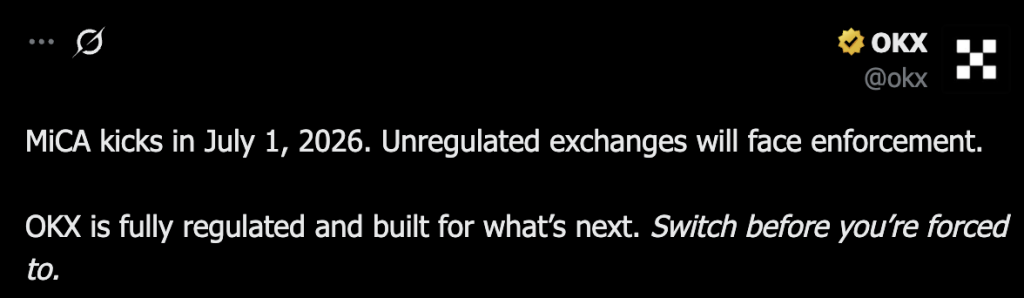
Jurisdictions with established licensing pipelines, Luxembourg, France, Ireland, have processed more applications than others, partly because their national competent authorities were earlier movers on crypto regulation.
The passporting advantage creates a strong economic incentive to secure authorization in any one member state, but the application process demands legal, compliance, governance, and capital resources that most smaller firms do not have at scale.
Smaller exchanges and non-EU platforms serving EU retail clients are the most exposed categories. Non-EU global exchanges that have not established authorized EU subsidiaries face the same hard stop as domestic unlicensed operators, MiCA’s scope is determined by client location, not firm headquarters.
Discover: The Best Token Presales
The post 83% of Europe Crypto Firms Have Not Secured MiCA Licenses, And the July 1 Deadline Is Days Away appeared first on Cryptonews.